
Tobacco and the Guane: Sacred Legacy, Resistance, and Rebirth
Introduction: The Leaf that Weaves Time
In the rugged lands of Santander, where the Chicamocha Canyon unfolds its majesty, a story of resistance, spirituality, and ancestral wisdom intertwines with the deep aroma of tobacco.
The Guane, an Indigenous people who inhabited these lands until the arrival of the Spanish in the 15th century, not only cultivated the earth but also venerated a sacred plant: tobacco.
For them, it was far more than a crop; it was a masculine principle that healed, strengthened, and improved vision inside caves, used in celebrations and healing rituals together with coca as the feminine principle.
This text narrates how that traditional knowledge, passed down through generations, has endured colonization, commercial transformation, and near oblivion, to be reborn today in practices such as those of the Roa family in Mesa de los Santos, where organic cultivation and aging processes keep alive the essence of an invaluable cultural legacy.
Tobacco in the Spiritual and Daily Life of the Guane
The Guane were an agricultural people settled mainly in the area known as Mesa de los Santos (formerly Mesa de Xerira), along the Suárez River and Sogamoso River, influencing towns such as Jordán, Socorro, and San Gil.
Their society was organized under a cacique and captains, and their agricultural system included maize, cassava, chili peppers, cotton, fique, and tobacco.
For the Guane, tobacco held deep spiritual and ritual importance.
They inhaled liquid tobacco essence to dilate the pupils and see better in caves, possibly used for ritual connection with the divine.
The act of manbear—consuming coca and tobacco—helped them withstand hunger, physical effort, and long journeys.
Tobacco was a tribute to the cacique, a sacred link, and a masculine principle that balanced the Guane cosmos.

The Conquest: Profanation and Silent Resistance
The arrival of the Spanish brought a drastic decline, reducing the Guane population by over 90%.
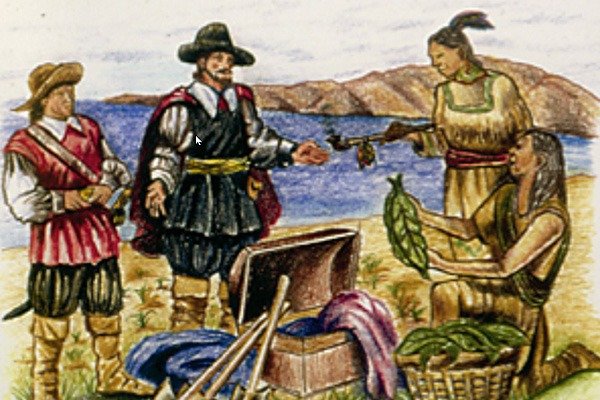
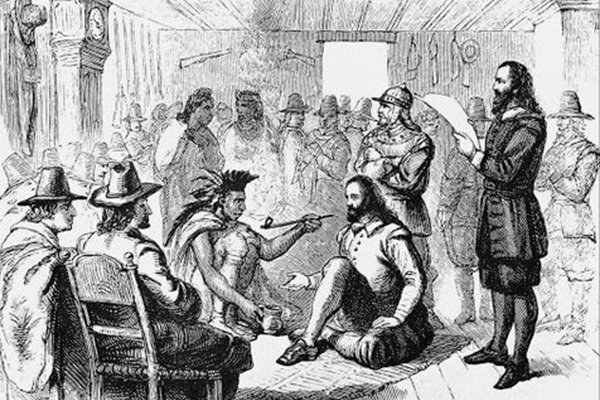
The Spanish discovered tobacco, took it to Europe, and by the 16th century, smoking had become common among the elite and later all social classes.
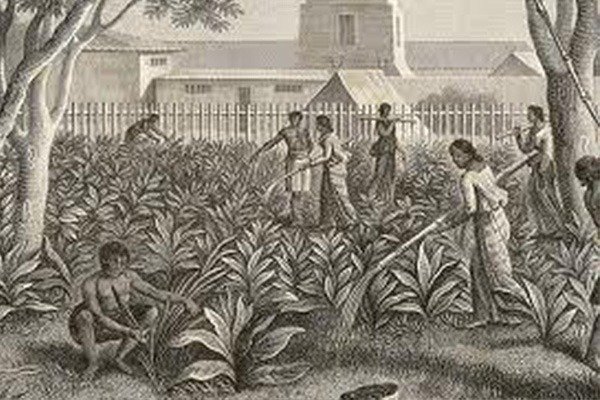
Tobacco became the most important commercial product for the Spanish in the region.
In 1776, the Spanish Crown declared it a primary export commodity and established monopolies. In towns like Barichara, San Gil, Socorro, and Girón, cultivation and local trade were forbidden.
Despite this, tobacco continued clandestinely, and authorities uprooted plants and burned seeds.
Growing tobacco became an act of silent cultural resistance.
Transmission of Knowledge: From the Guane to the Roa Family
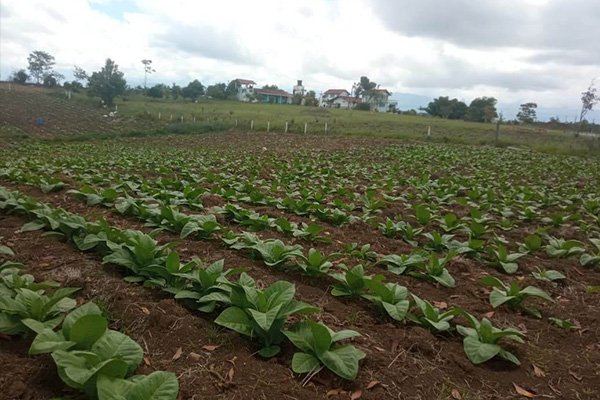
Ancestral knowledge survived through oral tradition and continuous practice among campesino families like the Roa family in Mesa de los Santos, now guardians of this intangible heritage.
Traditional process:
- 45-day seed nursery
- Transplanting into the field
- 2–3 months of growth
- Drying in caneyes for 2 months
- Pressing and bundling of dried leaves
The Roa family stands out for:
- Organic purity
- Natural aging techniques
- Handmade processes (“from the sowing of the tobacco soul to its final destination”)
This is a traditional Patiamarillo knowledge system, preserved as a campesino craft with family labor.
Rebirth: Aging and Medicinal Attributes Today
Large-scale tobacco production has declined due to health concerns, tax policies, and smuggling, but this has sparked a cultural renaissance focused on artisan quality and ancestral recovery.
Today, tobacco is used mainly by fabriquines in Santander to craft handmade cigars and pipe tobacco.
Some local brands now compete nationally and internationally.
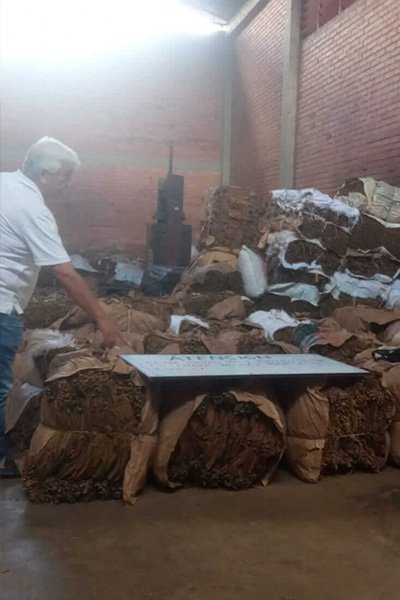
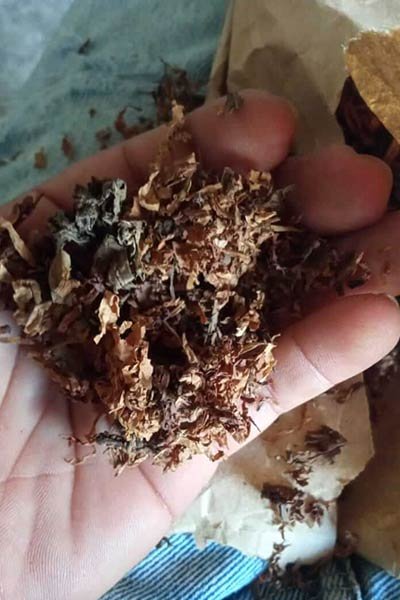
The Roa family’s aging techniques include:
- Aging up to 15 years in humidity-controlled warehouses
- Natural aging with fruits, aromatic plants, or essential oils (floral, coffee, mint, banana)
- A 100% organic process, free of chemicals
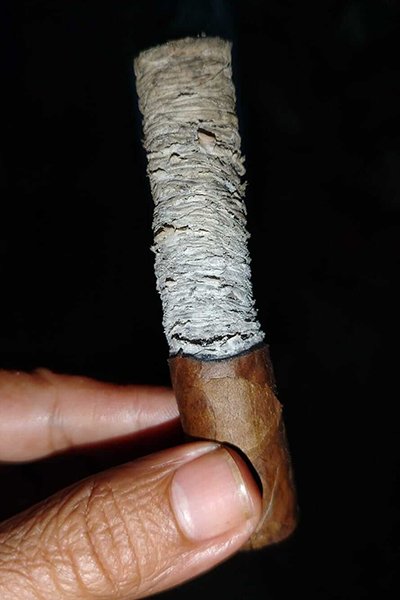
This enhances flavor and, according to tradition, gives tobacco natural and medicinal attributes, reduces nicotine concentration, and produces pleasant smoke—echoing the Guane view of tobacco as a healing plant.
Conclusion: A Legacy Enduring in the Smoke
The history of tobacco and the Guane is the story of a people who resisted colonization, prohibition, and cultural homogenization.
From the ritual caves of Mesa de los Santos to the aging warehouses of the Roa family, tobacco has connected past and present, the spiritual and the material, resistance and resilience.
Knowledge of lunar cycles, organic fertilizers, natural pesticides, and natural aging are Intangible Heritage Knowledge now being recovered.
As long as the aroma of aged tobacco fills the paths of Santander, the spirit and legacy of the Guane will endure.